
Today we are going to clarify a few things. There have been many questions surrounding the subject of omnichannel marketing. The most common question being: what is omnichannel marketing?
In this article, we will tell you exactly what omnichannel marketing is and why you should make use of it. Here is our today's learning list:
- What is omnichannel marketing?
- Omnichannel vs multichannel
- Omnichannel marketing strategies & examples
Let’s dive in!
The definition of omnichannel marketing
Omni is Latin for ‘every’ or ‘all’ and in this context it means you combine all the channels into one cross-channel content strategy. The ultimate goal of omnichannel marketing is to enrichen the customer experience and create better long term relationships with customers.
How do you do this? By designing and structuring your communication channels in such a way that they are complementary to each other. Your channels cooperate to make the customer experience better. Omnichannel marketing exceeds its predecessors because it makes the channels work together to strengthen the overall experience. The predecessors like multichannel focus on having multiple channels but without there being any form of cooperation between them.
This content strategy can be found within all kinds of sectors. For example finance, real estate, government, retail, e-commerce, mobile applications, and social media.
Lastly, the channels are a mix of offline and online channels to offer ‘one feeling’ for customers. The channel communication should send out one message and it should feel and be experienced as familiar by the customer.
Omnichannel marketing is not…!
Omnichannel marketing doesn’t mean you have to get all the possible channels within your strategy. This is practically impossible but furthermore, it isn't the best for your business. Some channels are just not interesting enough for you. Pick your channels with care and make them work together!
Omnichannel vs Multichannel
The most important difference between omnichannel and multichannel is the cooperative integration that omnichannel possesses in contrast to multichannel. With omnichannel, the different channels work together for a better customer experience. Multichannel is exactly what the name tells you. You have multiple channels but they don’t work together but rather parallel.
Why omnichannel marketing is important to you
As we said briefly before, the most important reason to do omnichannel marketing is to give your customer the best possible experience. This means your customer should feel as comfortable buying from you offline as online and vice versa. There should be one type of communication through all your different channels.
Don’t do this: if you are mainly a brick and mortar store, don't let your online experience feel different to customers. There are still so many physical stores that have great customer service. Professional advice combined with a warm and personal touch, until I visit your website...
Unfortunately, many bricks and mortar stores see a website as something they have to do. This results in poorly branded websites that don’t portray the business properly. Avoid this by making sure there is familiarity across all your channels. Focus on good customer support and make sure your branding colors are the same on every channel.
The marketing message you send through every single channel should feel and be experienced the same.
Omnichannel marketing strategies and examples
Now that you know what omnichannel marketing is, it is time to implement this knowledge into your business. In this chapter, we are going to take a look at different strategies and examples with the idea to inspire you and activate you to take action.
Physical store
Most companies start as a physical store. Therefore online marketing is mostly focused on getting your customers from online to offline (your store). However, it is important to also build your audience online.
One way of doing this is by arranging social media giveaways. Tell your in-store customer about the event or handout a flyer with the information. You will ask them to follow your page, like your posts, and share your content with their friends. They will get a chance to win a great price and you will grow your online presence rapidly. This will result in more revenue and who says no to that!
Tip: make sure to focus on customer support for both offline and online. You don’t want to have a different level of support quality. When people experience great advice and support offline, they will also expect that same level of support online.

Social media
Social media is a tricky one for omnichannel marketing because they are designed to keep you away from other marketing channels. The goal of social media is to keep you as long as possible on their platform. However, there are ways to make social media work together with your other channels. We will discuss the three most important social media: Instagram, Pinterest, and Facebook.
Instagram is the most difficult one to integrate with your other channels. Instagram's purpose is to keep you swiping down the page and keep you when you are about to leave the app. But there is also a very positive side to Instagram. It allows you to visually show your business to potential customers.
One way to use Instagram is to show your customer what differentiates your product from your competition. For example, if you are a small e-commerce business selling tea you can make photos of the production, packaging, and unboxing of your product. By adding your website link in your bio, you can attract visitors from Instagram to your store.
Video marketing keeps rising very vastly and Instagram gives you a free platform where you can display your videos.
Instagram is expected to reach 125.5 million active users by 2023. Of all the users, 90% of them follow at least 1 brand or business. If you are not on Instagram with your business, it is time to consider it!
Arguably the most important platform for bloggers. Pinterest is not your traditional social media. Traditional social media want to keep your followers on their own platform. Pinterest wants your followers to go visit your website which makes it highly valuable.
Pinterest is great to integrate your website and physical products into a cross-channel content strategy. The idea of pins is to inspire people. If you are a hairdresser for example you can post pins with different haircuts to inspire people. When your pins are being found by the public they will look you up on your website via your pin. This could result in them booking an appointment at your shop.
This way you integrated Pinterest in both your physical and online (website) channels.
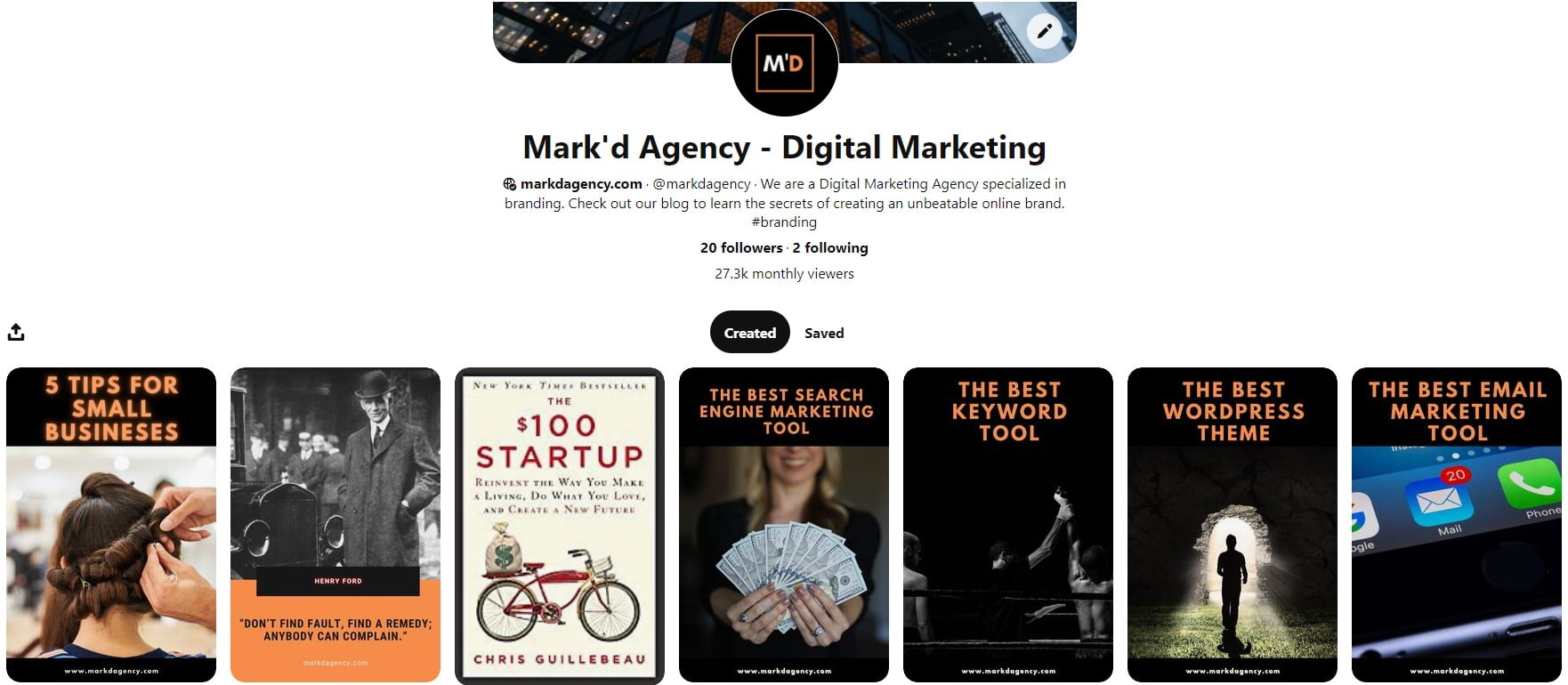
Tip: focus on making your pins look different. When people scan your pin between others they should recognize your style. Below you will find a picture of our own Pinterest account.
Last but not least, Facebook. Facebook remains the colossus of the social media world. It has a total of 2.7 billion (yes with a b) monthly active users in the second quarter of 2020. In contrast to Instagram, Facebook is easier to integrate with other channels.
Facebook allows you to share content from other sources like blogs or videos. Furthermore, you get the opportunity to create a business page on Facebook. This gives you an online space to interact with your customers and potentially turn them into fans. You can integrate your physical store within Facebook through a location map, website, address, and even telephone number.
Recently, Facebook introduced Facebook Marketplace. This is a platform where you can buy or sell products. You can either do this locally or shipped.
Another trend is Facebook groups, it is a great way to create an active online community around your business. The beauty of Facebook groups is that you can create a vibrant community that functions on its own without you having to interfere too much. People will react to each other and this will often convince newcomers to buy from you. After all, it's stronger when a customer likes your product than when you tell your customer that your product is great.
E-commerce
E-commerce was doing spectacularly for businesses wanting to invest in it before COVID. But because of the pandemic, you really cannot ignore e-commerce as a marketing channel for your business. We experienced the weakness of physical stores when they were forced to shut down. E-commerce giant Amazon profited greatly during this period.
Shopify store
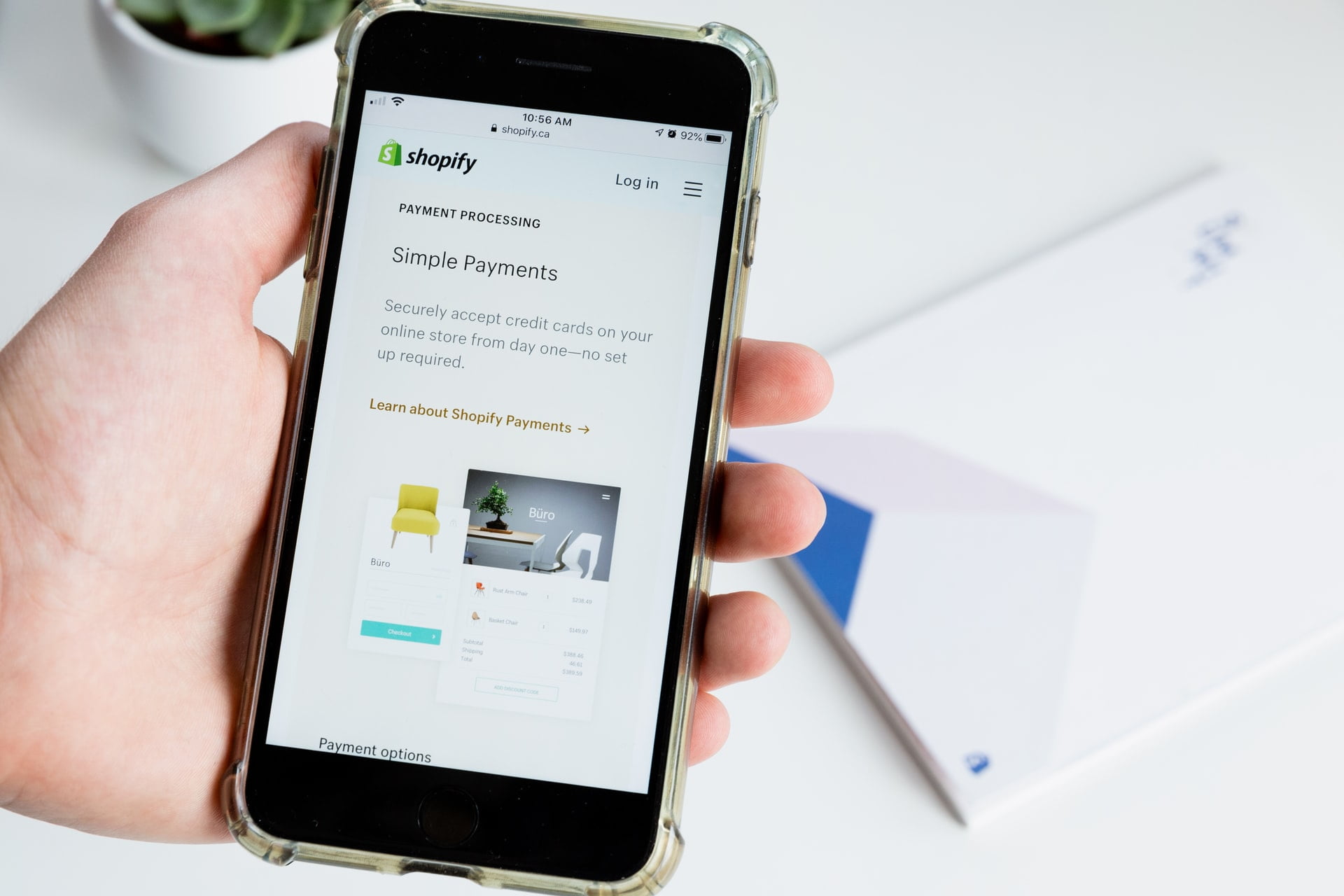
Creating your own store online was a difficult task back in the day. You either had to be good at coding or be willing to pay a lot of money for making a webshop. Shopify truly changed this on a large scale by allowing all business owners to start their own e-commerce store without needing any coding skills or pay a lot of money.
Shopify is a marketing channel you can easily integrate with others. You can use your social media to link towards your shop or even integrate your entire shop catalog into social media like Instagram or Pinterest. This way people can buy the products from your Shopify store on Instagram or Pinterest.
Lastly, Shopify is very proactive in adding new software partners to its integration system. Whether this is social media, email marketing providers, or web hosting partners, Shopify is trying to make it compatible on a whole new scale.
Tip: make sure your branding (colors and design) is identical to your physical store and your online content. People want familiarity! Furthermore, your online and offline support should be at the same quality level.
Amazon FBA
If you want to add e-commerce to your channels but you don’t want to do the distribution, Amazon FBA might be an idea for you. With Amazon FBA you provide the product and Amazon warehouses and distributes your products. You will pay a fee for this.
Amazon FBA is for omnichannel marketing more difficult than a Shopify store. With Shopify, you own the store and can design it exactly as you want. With Amazon FBA your products will be placed in Amazon's store with their branding colors, style, and support.
There is one thing you can address and that is the packaging. With the packaging, you can portray your brand. Think about adding personal notes to the packaging and to include your social media name on the labeling.
Use this tool to connect your channels into one omnichannel
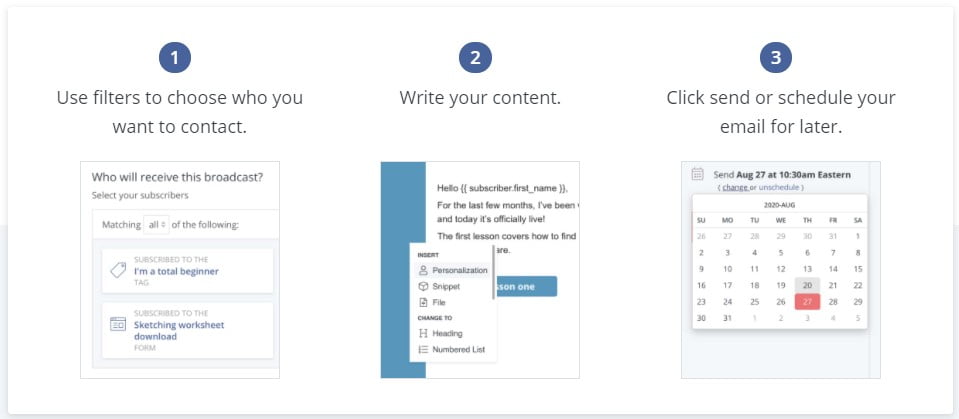
A great way to start integrating different channels into each other is through ConvertKit. ConvertKit is an email marketing provider. With their software, you can send messages to your customer about the different marketing channels you use. Therefore the customer knows about the existence of the other channels and will accept it as a channel where they can buy your product.
ConvertKit also has integration features with many partners like Shopify for instance.
Email marketing is a great way to boost your sales and integrate the different channels you own. As a fellow entrepreneur, I highly suggest that you dive deeper into ConvertKit. It is worth it.
For a full review on ConvertKit check out this post: https://markdagency.com/convertkit-review-2020-pricing-results/
For More Online Branding Resources
If you want to learn more about branding, please feel free to check out the branding blog. We work hard to upload as much value as we possibly can. It's our goal help and educate entrepreneurs to build a brand that functions as your legacy.
We have also listed the best branding tools that we use for our clients on this page.
For questions or if you just want to interact with us, please leave us a comment down below!