

There is no need for introducing Netflix to anyone, but that wasn’t always the case! Netflix comes from humble beginnings and was almost bankrupt on multiple occasions. Hey you! Welcome to our first-ever brand inspiration post. In this series, we are going to highlight iconic brands and breakdown their secrets for success.
After reading today’s article you will know:
- How a $40 late fee destroyed Blockbuster
- The revolution of television
- How much money $1000 invested in Netflix would have made you
- The secret weapon of Netflix...
Time to hit play and binge-watch The Rise of Netflix!

Source: Netflix
Reed Hastings – The Visionary Behind Netflix
Reed Hastings is one of the two founders of Netflix. Hasting had a weird career start by applying for the Marine Corps but never finished the training and instead joined the Peace Corps. With the Peace Corps, he taught math at a high school in Swaziland, Africa. When he returned to the States, Hastings attended Stanford University and graduated in 1988 in Computer Science.
Hastings first job was at Adaptive Technology which was lead by Audrey MacLean. Hastings says the following about what she meant to his growth:
"From her, I learned the value of focus. I learned it is better to do one product well than two products in a mediocre way."
- Reed hastings
In 1991 Hastings founded his first company Pure Software which was later on acquired by Rational Software. That’s when Hastings left and went on to start Netflix with Marc Randolph. Taking his failures and experience at Pure Software with him, so they wouldn’t occur at his next endeavor.
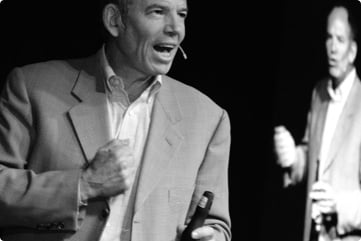
Marc Randolph – The Silicon Valley Veteran
Marc Randolph was no rookie when he co-founded Netflix with Hastings. He started numerous successful mail-order companies before his greatest entrepreneurial endeavor. The experience Randolph brought to the table was crucial for the early success of Netflix. Back in the day, Netflix started as a rent-by-mail DVD service. Making Randolph’s past mail-order skills highly valuable.
Randolph was working as the marketing director for Hasting’s company Pure Atria. When Pure Altria was sold, Hasting and Randolph partnered up and started Netflix. Randolph invested $2.5 million in cash into their startup.
In 2003, Randolph retired from Netflix and shifted his focus to mentoring young entrepreneurs within the tech industry.
Source: Marc Randolph
Where It All Started… A $40 Late Fee
So where did the idea for this now $230 billion company came from? According to Reed Hastings, he forgot to bring the movie Apollo 13 back to Blockbuster and had to pay a late fee of $40. He was so embarrassed that he didn’t want to tell his wife. And yes, he was a millionaire at that time. Nonetheless, the whole issue bothered him and he was looking for a solution. That's when his idea for a rent-by-mail DVD service came alive. You could rent your DVD via the internet and get it delivered by mail. No more late fees for Hastings!
What’s that name ‘Netflix’ about?
The name is actually pretty simple. ‘Net’ comes from internet. And flix comes from flicks which mean movie. Nowadays Netflix or Netflixing has become a word on its own. 'Let's go on Netflix for 2 hours.' If that doesn't tell you how a strong brand can become part of our society, then I don't know what will do the trick.
The Death Of Blockbuster
Netflix existed before its prime time. In a certain way, you could say they were too early. The old school video renting were dominating the market. The market was lead by video goliath Blockbuster. Blockbuster had at that time a 4.5 billion dollar valuation, 8000 stores, and 60,000 employees.
In 2000, Reed Hastings went to Blockbuster with a deal. Netflix would become Blockbuster’s internet part of the Blockbuster brand and drop the name Netflix. The new name would have been blockbuster.com. However, Blockbuster didn’t take the offer seriously and practically laughed Hastings out of the boardroom. Their main reason was that Netflix still didn’t make any profit.
To be completely fair, it now looks like a dumb move from Blockbuster but it made a lot of sense from a financial perspective. Would you invest in a company that never made any profit before?
Despite many critics, Hasting knew their time would come. In 2001, the world was finally ready yet. The costs of DVD players dropped which made them more affordable and therefore more movies were ordered. The subscriptions increased rapidly but there was still no real profit yet!
That's why in 2002 Netflix went public to raise money and continue their fight with Blockbuster. Unfortunately for Blockbuster, they were too late with innovating and couldn't catch up with Netflix. In 2005, Blockbuster quit the fight and tried to keep its head above water with their old school video renting business. This didn’t survive the advancements of time and in 2010 Blockbuster filed for bankruptcy.
Netflix had won and Blockbuster died after being too late with innovating their business model.
Source: Wikipedia
Finally Profitable In 2003
After 6 years of not creating any profit, Netflix finally started to be profitable in the year 2003. It was also the year that Netflix had its first 1,000,000 subscribers. The main reason that it took so long for Netflix to turn any profit was that they were too advanced for society. But finally, society was catching up with the technological advancements and started to appreciate what Netflix had to offer to the world.
In 2004, the profitability was interrupted by a final attempt from Blockbuster to undercut the prices of Netflix. As you know that didn’t turn out too well for Blockbuster. However, it did interrupt the profitability of Netflix but in the end, it didn't make a difference.
In the last few years, Netflix has proven to be highly profitable. Increasing its net income from $0.6 billion in 2017 to $1.9 billion in 2019. An impressive growth I would say.

Video On Demand (VoD) CRUSHED Its Competition
In 2007, Hastings vision for Netflix started to become reality. It finally started to roll out its video-on-demand platform. In the beginning, you didn't have to pay any additional costs to make use of their video-on-demand platform. That was mainly caused by the difficulty of getting licenses for movies. The movie library was a total mess and really not worth a penny.
This changed in 2008 when Netflix made a deal of $20 million with Starz to acquire Disney and Sony library releases. This turned out to be a great deal for Netflix and it skyrocketed the video-on-demand service. It was not rare that Netflix could make these profitable deals because after wiping Blockbuster from existence, Netflix was the only big boy in town. They could easily pick one great deal after another.
After getting their library filled with the best and most movies available, they went on to make new partnerships. This time it was not with movie studios but with the makers of devices. We are talking about Apple, Sony, Microsoft, and more.
Netflix Original – The Start Of Even More Profit
The last few years have been different. No more easy deals but an increase in licensing costs were making the video-on-demand giant nervous. That's why in 2013, Netflix launched its first Original Content (meaning they owned the rights of the show). The name of this TV show is House of Cards and turned out to be a huge success for Netflix. After this show, there were many more great Netflix Originals. This increased the growth and profit even when the licensing costs were rising sky high.
One of the latest Original successes is the Witcher. The lead character is being displayed by no other than Henry Cavill himself.
If You Invested $1000 In Netflix Stocks, You Now Had…
To give you a better understanding of the insanity of Netflix's growth, we are going to take a look at the stock market. We will go back in time and see what the stock price was on the IPO (initial public offering). Afterward, we will take a look at what $1000 in 2002 would have made you in 2021.
Netflix had 2 stock splits and if you would have invested $1000 worth of stock you would have owned around 925 shares. The price of 1 stock is currently $522. That would give you a total sum of $482,850.
Not bad for a company that didn’t create any profit until 2004.

Source: Google
Netflix Algorithm Beats Hollywood
Now, what is the secret weapon that Netflix is using to stay on top of the game? Why do they always seem to know what the next best thing is? It's called data.
Netflix has invested substantially into its algorithm and that has proven to be worth the money. The algorithm is a lot smarter now. It tracks the data of 151 million subscribers and analyzes it on potential gaps in the market. It's no coincidence that Netflix is nailing it with their Original Content. They are using the data to create shows and movies that people want to see! All are based on data and that's why Netflix knows what you want to watch before you do.
For the coming years, there is plenty of good coming their way. The Emmys are almost in need of its own warehousing. They will continue to use their data and algorithm to keep creating their own content because there are enemies at the gates.
How Long Will Netflix Stay on Top?
Netflix was in war with Blockbuster but now there are even bigger competitors on the horizon. Starting with the largest company of them all: Amazon. Amazon is doing what Amazon is good at. Conquering markets with force. They are creating their own original content through Amazon Prime and are competing for movie licenses.
Hulu is probably the most unknown competitor but really has a few unique buying reasons that will make you at least question your other subscriptions. Hulu doesn’t have a great Original arsenal. They have a few series like the Handmaid’s Tale, but really not a match for Netflix or Amazon. However, Hulu offers network TV programming. Furthermore, you can get live tv through Hulu and integration options with HBO, Cinemax, Showtime, and Starz. Making Hulu a very interesting competitor that fights Netflix with different weapons than the others do.
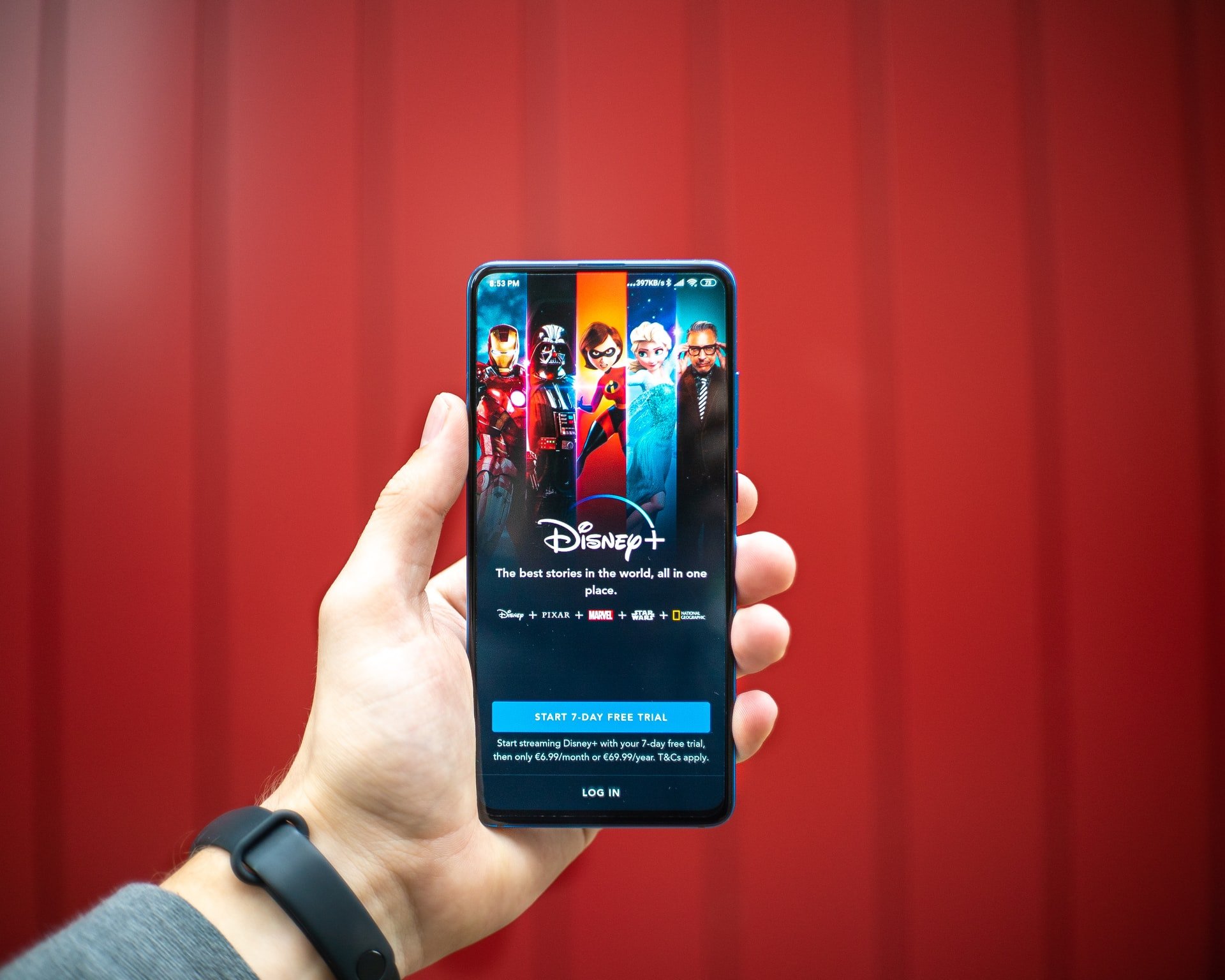
Disney is the latest competitor to enter the market. Disney has a massive archive of movies and a couple of absolute beasts. Disney owns Star Wars, The Avengers, but also National Geographic! If Disney didn't own the rights of these amazing names, they wouldn't have stood a chance against Netflix and Amazon. But they do have these names in their arsenal and that gives them a fighting chance.
Creating their Original Content and expanding by acquisition is the only way to stay on top of Netflix. Time will tell if it's enough. Who do you think will win? Leave a comment below in the comment section. I would love to hear your thoughts.
Up Next... NIVDIA VS AMD
If you enjoy the battles of tech giants like we do, then you should check out NIVDIA vs AMD written by Musicella! She is a content creator within the gaming industry. From time to time she picks big brands within gaming and tell their origin story. NVIDIA vs AMD is my favorite so far! Rather than siding with one brand, Musicella breaks down the strenghts and weaknesses of both.
If you want to learn more about branding, visit the branding blog where we upload daily. Or if you want to know the best branding tools that we use for our clients, please check those out as well.
For questions about this article, or online branding, leave a comment below! You can also reach by email at info@markdagency.com.